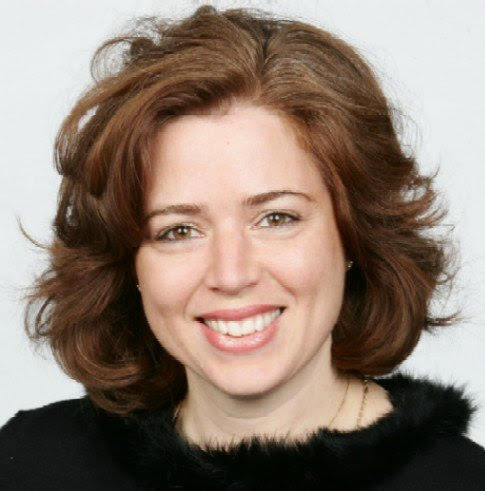
 Montreal Voice Coach
What sets Lesley Findlay apart from other teachers?
Many singers spend years struggling with the same technical problems: running out of breath, vocal strain, limited range, inconsistent tone, and uncertainty about what they are supposed to feel when they sing. Lesley Findlay helps singers overcome these obstacles by making complex vocal concepts easy to understand and apply. A lifelong student of the voice, she has dedicated decades to studying singing, breathing, and vocal function. Her unique approach combines clear explanations, heightened body awareness, and targeted exercises that help singers build efficient technique, gain confidence, and accelerate their progress.
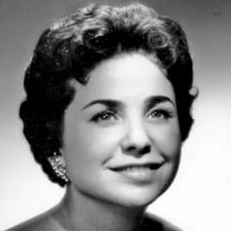
Lesley’s formal vocal training began at age sixteen in West Vancouver with Russian voice teacher Nona Mari, who first introduced her to the principles of bel canto and appoggio technique, known as back breathing. Mrs. Mari provided a good grounding in technique, style, and repertoire, introducing her to early classical Italian pieces while supporting her love of Broadway and popular songs. As her studies progressed, she pursued opportunities as both a singer and actress, appearing in numerous stage productions, including leading roles as Hodel in A Fiddler on the Roof (Stein, Bock & Harnick) and Nellie in South Pacific (Rodgers & Hammerstein).
At Studio 58, Vancouver Community College’s professional theatre training program, Lesley Findlay immersed herself in the study of dramatic theatre before switching to jazz and then classical voice as part of VCC’s music program. Under the guidance of Dr. Jacob Hamm, she graduated with a diploma in classical singing. Beyond vocal training, she gained an early appreciation for the art of teaching through Dr. Hamm’s weekly masterclasses, carefully observing how he balanced encouragement with constructive criticism while guiding students toward their best performances. During this time, she also developed a passion for opera, one that would influence much of her future study, performance, and pedagogy.

In the summer of 1985, Lesley attended an intensive program at The Banff Centre for the Arts, where she worked with well-known voice and speech coach Colin Bernhardt, who introduced her to the important relationship between speech and singing. He claimed she was speaking too low, which seemed odd at the time but which was nevertheless proven true over time. Lesley learned the wisdom of those words when her West Coast allergies subsided after each move east. Connecting the speaking voice with the singing voice had a lasting impact and remains a core concept in her approach to singing. On stage at Banff, she earned critical acclaim for her portrayal of Kate in Cole Porter’s Broadway musical Kiss Me, Kate.
Lesley Findlay went on to complete her Bachelor of Music in Classical Voice Performance at the University of Toronto, training as a mezzo-soprano under the guidance of Mary Morrison, O.C. (Order of Canada), a voice teacher and champion of new Canadian music. Other notable teachers and coaches included Rosemarie Landry, O.C., (French Diction), Greta Kraus, O.C., (German Diction), Douglas Bodle (Early Music Coach), John Hess (third-year recital accompanist) and Che Anne Loewen (fourth-year recital accompanist). During this period, she became recognized for her interpretations of contemporary music, including her performance of R. Murray Schafer’s Beauty and the Beast, a 72-minute solo opera. The work was presented at both the Toronto Conservatory of Music and again at the Peterborough Festival of the Arts.
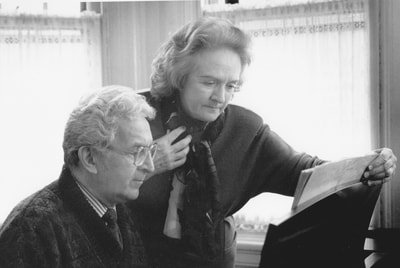
After graduation and a move to Montreal, Lesley Findlay entered the soprano repertoire under the mentorship of mezzo-soprano and voice teacher Lucile Villeneuve Evans and her husband, Dr. Robert K. Evans, a pianist, coach-accompanist, linguist, and conductor. Together, they had served on the opera faculties of Indiana University, the University of Cincinnati College-Conservatory of Music, and Teachers College, Columbia University, before joining the faculty of McGill University. It was with the Evanses that Lesley first explored coloratura arias before moving into the heavier lyric roles of Verdi and Puccini.
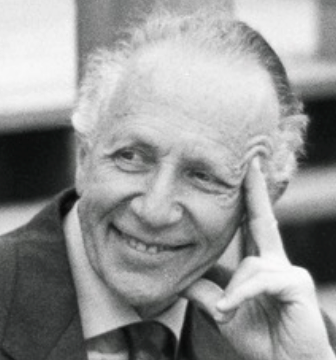
While completing two years of postgraduate study in McGill’s Concert Diploma program, Lesley Findlay won critical acclaim for her title role in Antonín Dvořák’s Czech opera Rusalka and was awarded McGill’s Schulich School of Music’s coveted Opera Prize. During this time, she also coached with professor and baritone Jan Simons and vocal coach-accompanist McMahon, O.C. Her studies later took her to Salzburg, Austria, through an exchange program with the University of Miami, where she participated in masterclasses with internationally renowned artists associated with the Salzburg Festival, one of the world’s leading celebrations of opera, music, and drama.
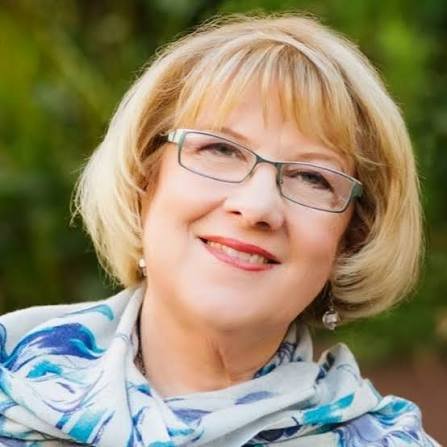
In 1991, Lesley Findlay opened her private vocal studio in Montreal and began her journey as a teacher. Still unsatisfied with her understanding of vocal technique, she frequently traveled to California for advanced private study with coloratura soprano Jane Randolph of Oakland, who taught her the value of light attack, pure vowels, and anchoring. At the same time, she continued her work with McGill professor Jan Simons, who deepened her understanding of Germanic Sprechstimme, the value of a high chest position, and a low jaw and solidified her understanding of anchoring. Together, these studies provided crucial insights into questions she had been pursuing since 1979.
Never content to accept conventional explanations, Lesley Findlay spent years analyzing exceptional singers, including an extensive study of the technique of Montserrat Caballé. Her efforts to understand and reconstruct the mechanics behind Caballé’s remarkable breath control, vocal freedom, and sotto voce high pianissimo helped shape many of the ideas and exercises she later developed for herself and her students.
This combination of advanced study, practical teaching experience, and independent research is grounded in a musical background that spans a broad range of styles, including Broadway, folk, popular, jazz, avant-garde, and classical music, as well as elocution for the stage. As a teenager, long before she dreamed of opera, Lesley performed regularly in a popular North Vancouver restaurant, accompanying herself on guitar and taking audience requests. Forty-seven years of experience in church and professional choirs, musical theatre, opera, and private teaching have given her a breadth of experience few can match. As a result, she works effectively with singers of all styles, as well as actors and public speakers facing a wide range of technical challenges.
Lesley Findlay’s lifelong interest in breathing physiology and vocal mechanics grew from her own struggle to overcome significant breathing limitations caused by lordosis, severe allergies, and rhinitis. Over several decades, she has researched breathing physiology, biology, and psychology while developing innovative breathing techniques through extensive work with thousands of clients and in collaboration with healthcare professionals. Known for her clarity and ability to simplify complex concepts, she helps singers build efficient, reliable technique through increased awareness, clear explanations, and practical exercises. She also works with individuals seeking to improve breathing for reasons beyond singing.
Lesley Findlay’s goal is not simply to help students sing or breathe better but to help them understand the mechanisms behind both. She believes that healthy breathing and expressive singing are built on the small choices we make every day, and better understanding leads to better choices. Whether a client seeks a solution to a specific problem or wishes to explore the voice and breath in greater depth, her teaching is tailored to their individual goals. Some work with her briefly to overcome a particular challenge, while others continue for years, discovering new layers of understanding and skill. Either way, her aim remains the same: to provide the knowledge, tools, and guidance each person needs to move forward with confidence.
For more information or to book a private lesson, please go to the contact page.